
09 Mar 2027
11:45 - 12:15
Expo Theater I
Jeff Rahn, Optical Network Engineer at Meta, will share his perspective on how optical networking is enabling the next generation of AI data centers. His keynote explores the application of innovative, low-power technologies to scale AI infrastructure, from co-packaged optics and optical backplanes within the data center to interoperable, high-capacity regional networks linking geographically distributed campuses. He will highlight the engineering lessons, architectural choices, and emerging technologies shaping scalable, energy-efficient and open optical infrastructures for agentic AI.
Moderator
-
Kumi Omori
Senior Specialist, NEC, Japan
Speaker
-
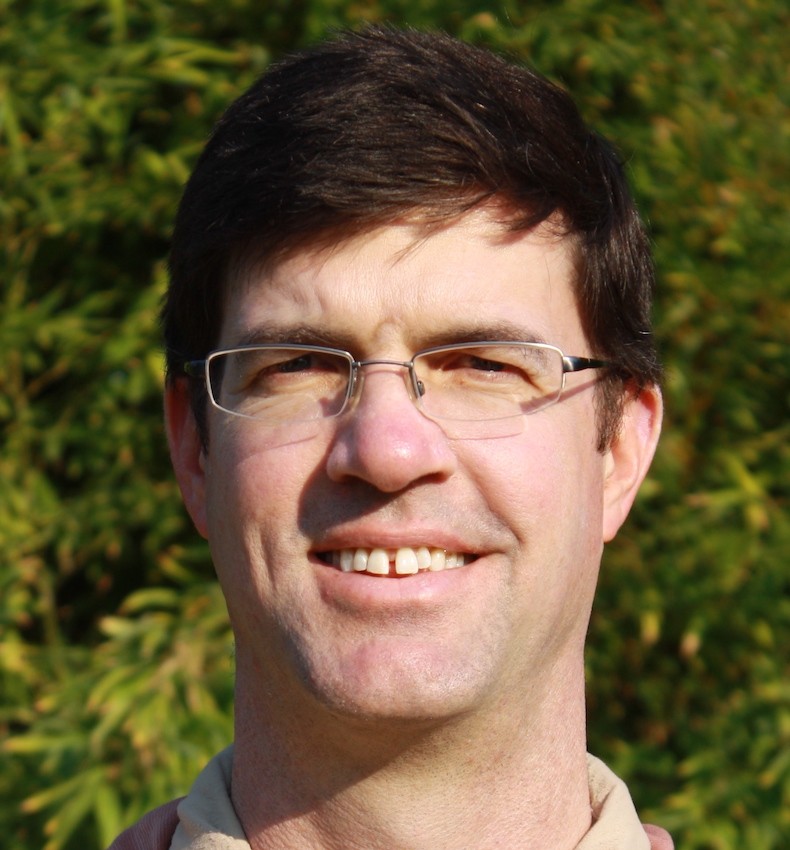
Jeff Rahn
Optical Network Engineer, Meta, United States
Agentic AI is reshaping what the data center network must do. Meta now trains frontier models on gigawatt-scale clusters and serves persistent, latency-sensitive inference for products like Muse — often in the same fleet, on the same day.
This talk traces how optics made that shift possible, starting inside the data center. Scale-up grows from in-rack to multi-rack and multi-row via the OCI MSA, keeping future AI infrastructure on open standards. Within the rack and row we are pushing photons ever closer to the switch. Our 51.2T CPO platform demonstrated reliability and scalability at hyperscale. Those learnings now shape our 102.4T direction, introducing an optical backplane as the partner fabric for CPO/NPO.
Across sites, our regional network lets geographically separate campuses collaborate as gigawatt-scale clusters. We deploy standardized, interoperable 800ZR+ optics over open, optically protected line systems, leveraging generational interoperability (400 to 800 to 1600) for network upgrades. Carrying that capacity over distance are our self-developed ILA huts, now evolving into power-efficient multi-rail ILA platforms. Attendees will leave with architecture choices, field lessons and open questions shaping the next generation of data center optics.Jeff Rahn is an Optical Network Engineer at Meta, where since 2019 he has led long-haul backbone architecture and the optical technology roadmap, including the transition to ZR optics with IP-optical integration. Previously at Infinera, he defined optical architectures for several generations of transponders, and at Big Bear Networks he developed electronic dispersion compensation for 10 Gb/s receivers. He received the B.Sc. in physics from Stanford in 1991, Ph.D. in 1998 from UC Santa Cruz and DESY in Hamburg Germany, and postdoctoral work at Xerox PARC on medical X-ray detectors. He has authored over 50 publications and holds 45 patents.